Tire Dressing — Deep Black Restoration + UV Protection for Your Tires
Professional tire dressing restores the rich, deep black appearance of your tires while shielding rubber from UV rays, ozone, and environmental damage. In the intense New Orleans sun, it's the difference between tires that crack prematurely and tires that stay supple and sharp.
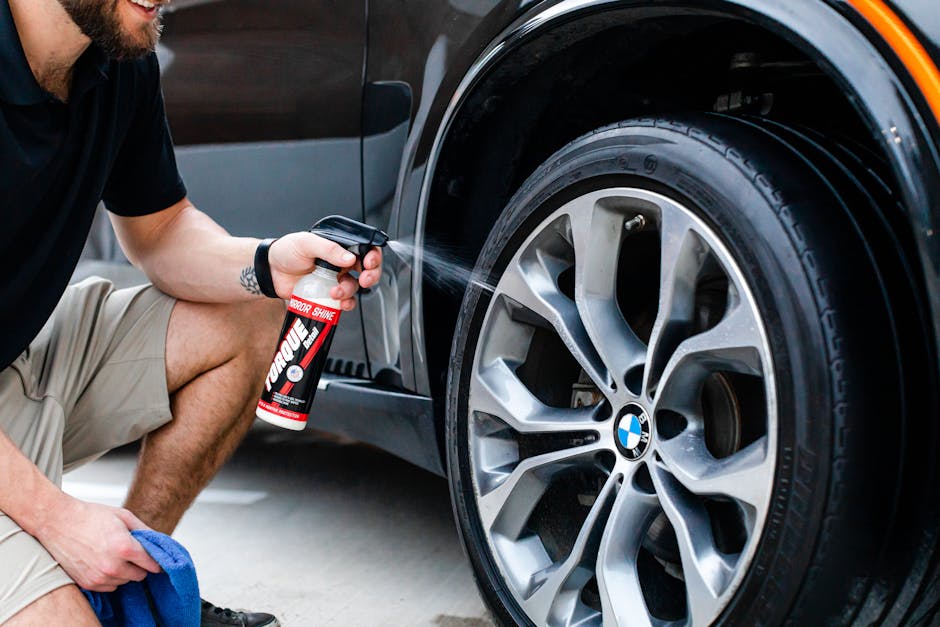
What's Included in Tire Dressing
Every service is performed by trained technicians using professional-grade products. No shortcuts — ever.
UV Protection
UV inhibitors and conditioning agents keep rubber flexible and resistant to dry rot — like sunscreen for your tires.
Deep Black Restoration
Restores the factory-fresh deep black appearance that fades with UV exposure and environmental contamination.
Water-Based Formula
We use water-based dressings that absorb into rubber, last 2-4 weeks, and don't sling onto fenders.
Proper Prep Work
Every tire is thoroughly cleaned with dedicated tire cleaner before dressing — never applied over dirt.
Controlled Application
Thin, even coats applied with foam applicator. Excess wiped away. No drips, no sling, no mess.
Standalone or Add-On
Available standalone or paired with wheel cleaning and exterior detailing services.
What Tire Dressing Does for Your Vehicle
Tire dressing is a protective coating applied to tire sidewalls that does two critical things: restores the rich, deep black appearance of rubber, and adds a protective barrier against UV rays and environmental damage.
Professional-grade tire dressing contains UV inhibitors and conditioning agents that keep rubber flexible and resistant to dry rot. Think of it as sunscreen for your tires — it blocks the damage that causes premature cracking and that unsightly brownish discoloration known as tire blooming.
Water-Based vs. Silicone-Based Tire Dressings
Water-based (what we use): Absorbs into the rubber, creates a satin finish, doesn't sling onto fenders, bonds with the surface, and lasts 2-4 weeks. This is the professional choice.
Silicone-based (store-bought sprays): Sits on the surface, creates a high-gloss wet look, attracts dust, slings onto paint and fenders, wears off in days, and may actually accelerate rubber degradation over time.
The difference in longevity and protection isn't subtle. Professional water-based dressings work from within the rubber, while silicone just sits on top and washes away.
Protecting Tires in the New Orleans Climate
New Orleans' subtropical climate creates a perfect storm for tire degradation. Intense UV radiation year-round, high humidity, and frequent rain cycles cause expansion and contraction that accelerates cracking.
Ozone, road salts, and petroleum chemicals from road surfaces all break down rubber over time. The brownish tint you see on neglected tires — tire blooming — happens when anti-aging compounds migrate to the surface and oxidize.
Regular professional tire dressing application is the most effective prevention strategy.
Our Tire Dressing Process
We never apply dressing to a dirty tire. Every application follows this process:
- Thorough cleaning with dedicated tire cleaner and stiff brush to remove old dressing, road grime, and browning
- Rinse and dry the sidewall completely
- Apply water-based dressing in thin, even coats with a foam applicator
- Allow absorption time for the formula to penetrate the rubber
- Wipe away any excess — no drips, no sling
Tire Dressing — Frequently Asked Questions
Everything you need to know. Still have questions? Call us at (504) 399-1448.
Our water-based tire dressing typically lasts two to four weeks under normal driving conditions in the New Orleans area.
Not when applied correctly. We use water-based formulas applied in thin, controlled coats — not silicone sprays that sling. Excess is always wiped away.
Yes. Tire dressing is applied to the sidewall only, never to the tread surface. It's safe for all tire brands and types.
It helps slow the process significantly by blocking UV rays and conditioning the rubber. However, it cannot reverse existing damage — that's why regular application matters.
Matte/satin gives a natural, understated look. Glossy creates a wet, shiny, dramatic appearance. Our default is a clean satin finish — we can adjust based on your preference.
Always. Applying dressing over dirt and grime traps contaminants against the rubber and reduces the product's effectiveness and longevity.
Ready to book your Tire Dressing? Get a free, no-obligation estimate in minutes.
Get My Free EstimateExplore Our Other Services
We handle everything your vehicle needs — all at your door.
Exterior Detailing
Full wash, clay bar, polish & protective wax for showroom shine.
Learn moreInterior Detailing
Deep cleaning of every surface — stains, odors, and buildup eliminated.
Learn morePaint Correction
Multi-stage polishing removes swirl marks, scratches, and oxidation.
Learn moreCeramic Coating
Hydrophobic protection that shields paint from UV, chemicals, and weather.
Learn moreGet Your Free Quote in Minutes
Tell us about your vehicle and we'll respond with a no-obligation estimate — usually within the hour.
Prefer to Talk?
Zero-risk guarantee. Not thrilled with your service? We make it right or you don't pay. That's the Big Easy promise.