Rim Decontamination — Chemical-Level Cleaning for Embedded Contamination
Rim decontamination uses reactive iron dissolvers that change color on contact — showing you exactly where corrosive brake dust, industrial fallout, and iron particles are being lifted from your wheel surfaces before they cause permanent damage.
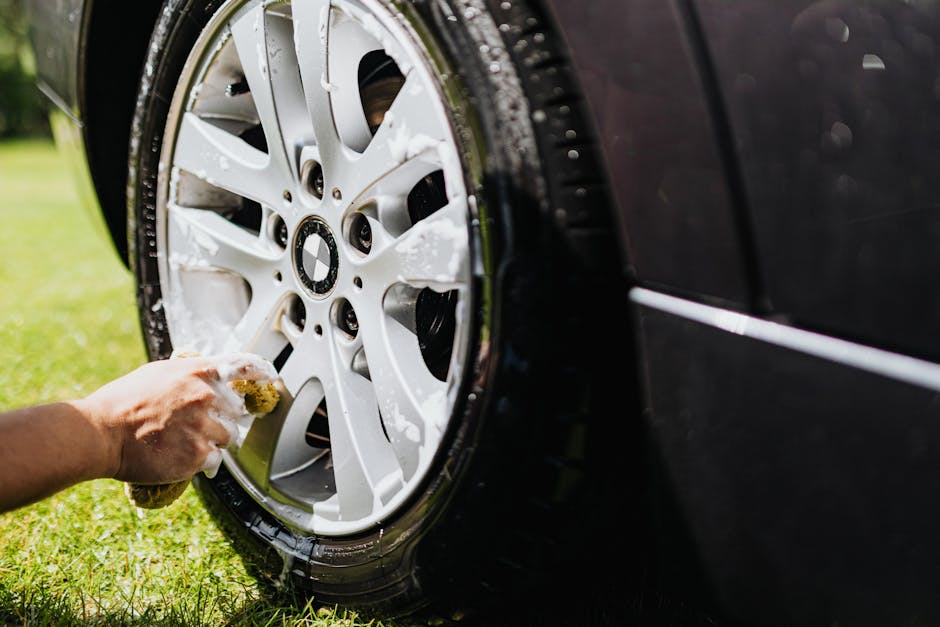
What's Included in Rim Decontamination
Every service is performed by trained technicians using professional-grade products. No shortcuts — ever.
Iron Fallout Dissolvers
Reactive chemistry that turns purple on contact with iron particles — a visual indicator of contamination being dissolved.
Prevents Pitting & Corrosion
Removes embedded iron before it oxidizes and eats through your wheel's protective clear coat.
Deep Decontamination
Reaches contamination that standard wheel washing cannot touch — microscopic particles bonded to the finish.
Finish-Safe Process
Product and dwell time selected based on your specific wheel finish — alloy, chrome, painted, or matte.
Thorough Agitation
Soft brush agitation works the product into spoke gaps, lug nut wells, and barrel surfaces.
Every 3-6 Months
Recommended decontamination schedule to prevent cumulative damage from New Orleans driving conditions.
Beyond Surface Cleaning
Regular wheel washing cannot touch microscopic iron particles that have bonded to your wheel's finish. These particles come from two sources: your own brake system and the environment — rail dust, construction debris, and airborne metallic particles.
In New Orleans, with rail lines, port activity, and heavy industrial corridors, environmental iron fallout is a year-round concern on top of standard brake dust accumulation.
How Iron Fallout Removers Work
The active ingredient — typically ammonium thioglycolate — reacts chemically with iron oxide particles embedded in your wheel surface. The reaction produces a visible color change (purple/red), serving as both a cleaning agent and a diagnostic tool that shows exactly where contamination is concentrated.
After application and controlled dwell time, soft brush agitation works the product into every surface, and a thorough rinse carries away the dissolved contamination.
When Your Rims Need Decontamination
Signs that standard wheel cleaning isn't enough:
- Orange or brown speckling that doesn't wash off
- Rough, gritty texture even after thorough washing
- Dull spots that don't respond to standard wheel cleaner
- Visible pitting beginning to form on wheel faces
If you're seeing these signs, the contamination has bonded to your wheel finish and needs chemical-level intervention.
Why Decontamination Prevents Costly Damage
A single alloy wheel replacement can cost several hundred to over $1,000. Iron oxidation expands inside the clear coat, creating ever-widening pitting. Corrosion spreads underneath the surface. Eventually the finish flakes and peels.
Regular decontamination every 3-6 months, combined with standard wheel cleaning every 2-4 weeks, is the most cost-effective approach to preserving your wheels long-term.
Rim Decontamination — Frequently Asked Questions
Everything you need to know. Still have questions? Call us at (504) 399-1448.
It's a chemical reaction between the iron remover's active ingredients and iron oxide (rust) particles embedded in your wheel surface. The color change is a visual indicator that contamination is being dissolved.
Yes, when performed by a trained technician who selects the correct product formulation and dwell time for your specific wheel finish — alloy, chrome, painted, or powder-coated.
Every three to six months for most vehicles. More frequently if you have performance brake pads or drive regularly in industrial areas.
Consumer products are available, but improper use — wrong product for your finish, too-long dwell time, or insufficient rinsing — can damage your wheel's clear coat.
Regular cleaning removes surface dirt and loose brake dust. Decontamination chemically dissolves bonded iron particles that are embedded in the finish and cannot be removed by washing.
It removes embedded particles and stops further corrosion progression, but cannot repair physical damage that has already occurred. That's why preventive decontamination matters.
Ready to book your Rim Decontamination? Get a free, no-obligation estimate in minutes.
Get My Free EstimateExplore Our Other Services
We handle everything your vehicle needs — all at your door.
Exterior Detailing
Full wash, clay bar, polish & protective wax for showroom shine.
Learn moreInterior Detailing
Deep cleaning of every surface — stains, odors, and buildup eliminated.
Learn morePaint Correction
Multi-stage polishing removes swirl marks, scratches, and oxidation.
Learn moreCeramic Coating
Hydrophobic protection that shields paint from UV, chemicals, and weather.
Learn moreGet Your Free Quote in Minutes
Tell us about your vehicle and we'll respond with a no-obligation estimate — usually within the hour.
Prefer to Talk?
Zero-risk guarantee. Not thrilled with your service? We make it right or you don't pay. That's the Big Easy promise.